Skip to main content Skip to search Skip to main navigation
Go to homepage

Solutions for public and private swimming pools

Swimming pool operators must ensure that the water in swimming and bathing pools is hygienically safe, whilst operating cost-effectively. Lutz-Jesco offers precision swimming pool technology for automated water treatment: Dosing, metering and control systems for disinfection, pH control, flocculation and fixed-bed filtration in accordance with DIN 19643. With over 70 years’ experience and personalised advice, we are a reliable partner.

Planning a disinfection system

A comprehensive solution for modern swimming pool water treatment

Discover the various components of modern swimming pool technology with Lutz-Jesco products and benefit from perfectly coordinated system solutions. Our technologies also ensure efficient and reliable water treatment, guaranteeing the highest standards of hygiene and quality.

Challenges in the treatment of swimming pool and bathing water

Swimming pool operators have to keep track of a wide range of hygiene and water quality parameters on a daily basis. Contamination, chlorine levels or fluctuations in pH not only pose a risk to bathers’ health, but can also lead to regulatory requirements or the closure of the facility. At the same time, there is growing pressure to use chemicals and energy sparingly in order to reduce operating costs and operate in an environmentally sustainable manner. Many operators are looking for systems that guarantee hygienically safe bathing water whilst also enabling cost-effective operation. A key challenge lies in particular in selecting suitable disinfection methods, determining the size of facilities and designing them to cope with fluctuating visitor numbers – a challenge that is difficult to overcome without expert advice.

Requirements and standards for swimming pool water treatment

In Germany, the treatment of water in public swimming pools and bathing facilities is governed by the Infection Protection Act and, subsequently, by DIN 19643, which sets out detailed requirements for water quality, treatment technology and operational management. It sets out water quality standards for microbiological and chemical parameters, as well as requirements for disinfectants, filtration and measurement and control technology. For private swimming pools, the DIN EN 16713-1 to 3 standards apply, as well as the guidelines of the German Swimming Pool and Wellness Association (BSW), which set out similar quality standards. In public swimming pools, the continuous monitoring and recording of water parameters using reliable measurement and dosing systems is mandatory; in private swimming pools, water quality must be ensured with the same level of reliability. Operators must ensure that all chemicals and plant components used are suitable for the intended purpose, meet the relevant requirements of the product standards and do not pose any health risks. Lutz-Jesco develops products that meet these standards and, through precision engineering, make it easier to comply with regulations during day-to-day operations.

The Lutz-Jesco solution

Lutz-Jesco offers a comprehensive range of dosing, metering and control technology for swimming pools. From the precise dosing of disinfectants and the continuous monitoring of water quality to fully automated disinfection systems, the product range covers all requirements. Lutz-Jesco dosing pumps reliably deliver chemicals such as sodium hypochlorite, sulphuric acid, calcium hypochlorite and flocculants. Measurement and control systems monitor pH, chlorine levels, redox potential and other parameters in real time and automatically regulate dosing. Chlorine gas dosing units, electrolysis systems and flow-through chlorine electrolysis systems round off the range of products designed to meet a variety of requirements. All products are manufactured in Germany, are characterised by high material durability and a long service life, and are designed for use in demanding operating environments. Personal contact and the development of bespoke solutions make Lutz-Jesco the preferred partner of many long-standing customers.

Water treatment systems for pools and swimming pools

Auxiliary hygiene parameters in the DIN 19643

The revised DIN 19643 introduces assessment criteria for water parameters that operators are required to monitor. Lutz-Jesco explains the new requirements and offers measurement and control technology that enables operators to comply with the specifications and document their compliance.

Learn more
Disinfection of pool and swimming pool water

The treatment of swimming pool and bathing pool water requires precisely calibrated dosing, measurement and control technology to ensure that disinfection, pH regulation and filtration consistently provide hygienically impeccable, crystal-clear water. Lutz-Jesco offers solutions that comply with the relevant standards.

Learn more
Calcium hypochlorite is ideal for smaller swimming pools

Calcium hypochlorite is a safe and effective disinfectant solution for smaller swimming pools. As a solid, it is easier to store than liquid chlorine and provides reliable disinfection. Lutz-Jesco offers suitable dosing technology for this application.

Learn more
Chlorine production through salt water electrolysis

The Technopool flow-through chlorine electrolysis system produces chlorine directly in the filtrate pipe, delivering the disinfectant exactly where it is needed to ensure safe swimming pool water disinfection. This technology promotes operational safety, material compatibility and visitor comfort in saltwater pools.

Learn more
Chlorine gas dosing in swimming pools

Chlorine gas is the most commonly used disinfectant in large public swimming pools. Lutz-Jesco offers specialised chlorine gas dosing units that ensure precise and safe dosing.

Learn more

Compliant solutions for swimming pools and thermal baths

In Germany, water treatment in swimming pools and thermal baths is subject to legal requirements which operators must comply with. Lutz-Jesco develops products that meet these requirements and make it easier for operators to comply with the regulations:

Infection Protection Law (IfSG) – Applies to hygiene requirements for water in swimming pools and bathing pools. Regulates the quality of the water.

UBA recommendation – Hygiene requirements for swimming pools and their monitoring. Newly published in August 2026, it sets out the regulations governing the monitoring of swimming pools.

DIN 19643 – Treatment of swimming and bathing pool water for public and commercial swimming pools. Sets out water quality parameters, treatment processes and technical requirements.

DIN 19605 – Fixed-bed filters for water treatment: design and components. Defines the requirements for filters.

DIN 19606 – Requirements for the design, installation, operation and maintenance of chlorine gas dosing systems for water treatment. Sets out the safe use of chlorine gas systems.

DIN EN 17818 – Systems for the in-situ production of biocides; active chlorine produced from sodium chloride by electrolysis. Sets out all the requirements for the various electrolysis systems.

DIN EN 16713 – Requirements and test methods for water systems in privately used swimming pools. Sets out basic requirements for the safe operation of private swimming pools.

BSW-Guidelines – Recommendations from the German Swimming Pool and Wellness Association for private swimming pools. Comply with the requirements of DIN 19643.

VDI 2089 – Guideline for technical building services in swimming pools, including ventilation and water treatment systems.

Media used in swimming pool water treatment

Various chemicals are used in swimming pools for disinfection, pH regulation and flocculation. Lutz-Jesco offers dosing technology designed for the safe handling of the following media:

  • Sodium hypochlorite (NaClO) – the main disinfectant used in many swimming pools
  • Sulphuric acid (H₂SO₄) – lowering the pH value
  • Diluted hydrochloric acid (HCl) – lowering the pH
  • Calcium hypochlorite (Ca(ClO)₂) – solid disinfectant (dissolved)
  • Chlorine gas (Cl₂) – Disinfection in larger plants
  • Sodium thiosulphate (Na₂S₂O₃) – chlorine removal, neutralisation
  • Polyaluminium chloride (PAC) – a flocculant used for water clarification
  • and others

Swimming pool products

Lutz-Jesco supplies dosing pumps, measurement and control technology, and fully automatic disinfection systems for swimming pools. The products are designed for use with chlorine-containing and corrosive chemicals and comply with the requirements of DIN 19643. From individual dosing pumps to complete water treatment panels, operators can find all the components they need for water treatment that complies with standards.

Skip product gallery
electric
Drum pump
Drum pump Lutz B2 Vario PP
for low-viscosity acids
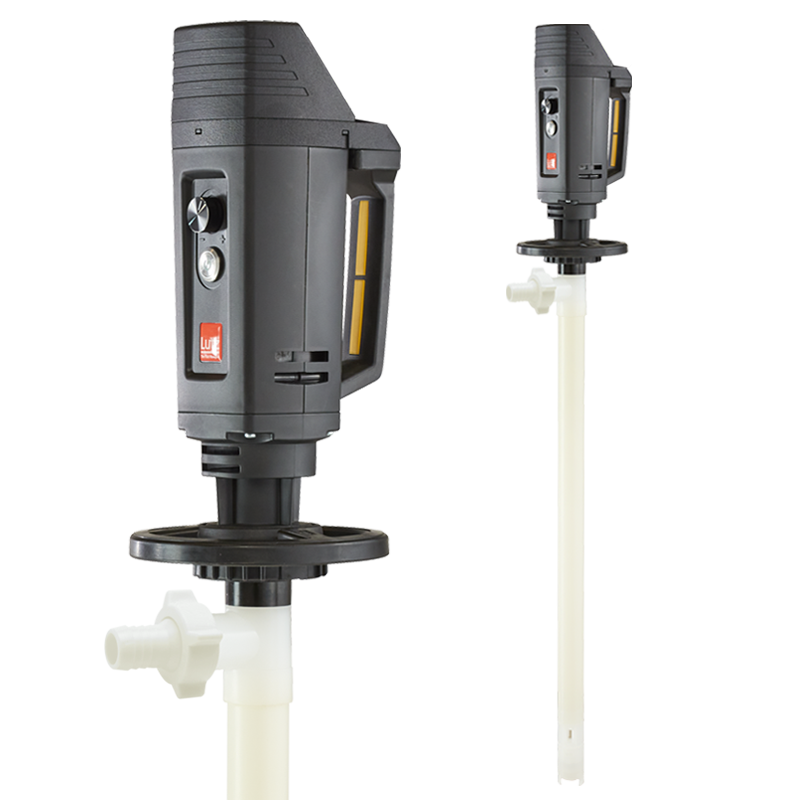
Description: The B2 Vario drum pump is suitable for low-viscosity, aqueous to slightly viscous media. The set is suitable for removing small containers such as canisters, hobbocks and drums. The pump is flexible at all times and thus conserves important resources. Infinitely variable speed controller for transferring and filling small quantities Features & advantages Sealless design (DL) conditionally dry-running safe Infinitely variable Powerful motor with improved service life Easy to service and dismantle
electric
Drum pump
LUTZ Elektrische Fasspumpe, Laborpumpe B2 Vario für Säuren, Laugen, Chemikalien, Öl
Drum pumps Lutz B2 Vario Niro
for liquid lubricants and cleaning agents
Description: The B2 Vario drum pump is suitable for low-viscosity, aqueous to slightly viscous media. The set is suitable for removing small containers such as canisters, hobbocks and drums. The pump is flexible at all times and thus conserves important resources. Infinitely variable speed controller for transferring and filling small quantities Features & advantages Sealless design (DL) conditionally dry-running safe Infinitely variable Powerful motor with improved service life Easy to service and dismantle
electric
Drum pump
Drum pumps Lutz B2 Vario PVDF
For larger delivery heads
Description: The B2 Vario pump set is suitable for low-viscosity acids, alkalis and chemicals. The set is suitable for dispensing small containers such as canisters, hobbocks and drums. The pump is flexible at all times and thus conserves important resources. Infinitely variable speed controller for transferring and filling small quantities Features & advantages Sealless design (DL) conditionally dry-running safe Infinitely variable Powerful motor with improved service life Easy to service and dismantle
Battery
Complete set
Battery pump set - B2 Battery PVDF
for concentrated acids and alkalis
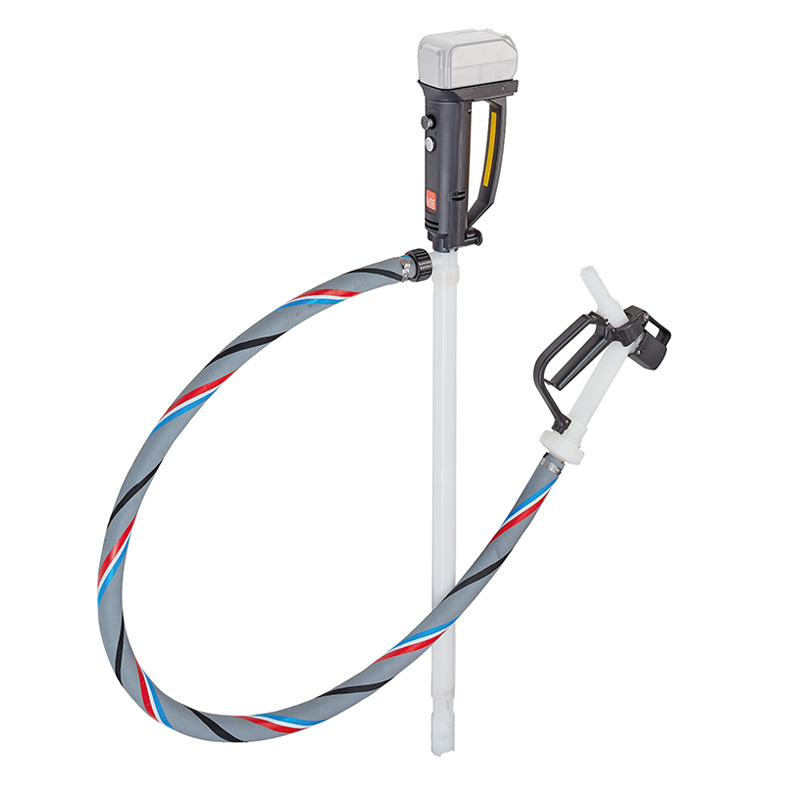
Description: The B2 Battery pump set is suitable for low-viscosity, aqueous to slightly viscous media. The set is suitable for dispensing small containers such as canisters or hobbocks. The pump is flexible at all times and thus conserves important resources. Replaceable, powerful rechargeable battery with Li-Ion Battery life 35 min at maximum speed 1 battery charge empties approx. 12 x 200 litre containers Features & benefits BLDC motor with high efficiency of up to 70% Infinitely variable Long battery life Automatic switch-off in case of overload Sophisticated quick-release fastener
Battery
Drum pump
Lutz Akku Fasspumpe - B2 Battery Niro ohne Akku
Battery Drum pumps - B2 Battery Niro
for liquid lubricants and cleaning agents
Description: The B2 Battery drum pump is suitable for low-viscosity, aqueous to slightly viscous media. The set is suitable for removing small containers such as canisters or hobbocks. The pump is flexible at all times and thus conserves important resources. Replaceable, powerful rechargeable battery with Li-Ion Battery life 35 min at maximum speed 1 battery charge empties approx. 12 x 200 litre containers Features & benefits BLDC motor with high efficiency of up to 70% Infinitely variable Long battery life Automatic switch-off in case of overload Sophisticated quick-release fastener
Battery
Drum pump
Lutz Akku Fasspumpe- B2 Battery PVDF ohne Akku
Battery Drum pumps - B2 Battery PVDF
for concentrated acids and alkalis
Description: The B2 Battery drum pump is suitable for low-viscosity, aqueous to slightly viscous media. The set is suitable for removing small containers such as canisters or hobbocks. The pump is flexible at all times and thus conserves important resources. Replaceable, powerful rechargeable battery with Li-Ion Battery life 35 min at maximum speed 1 battery charge empties approx. 12 x 200 litre containers Features & benefits BLDC motor with high efficiency of up to 70% Infinitely variable Long battery life Automatic switch-off in case of overload Sophisticated quick-release fastener
Battery
Drum pump
Accumulator Drum pumps - concentrated acids and alkalis
for highly chemical liquids and salts
Description: The new B3 Battery is a battery motor for demanding and efficient pump applications. The current-independent application range enables the greatest possible flexibility with the world's highest volume flow of a battery pump (up to 180 l/m). Perfectly suited for withdrawing or transferring concentrated acids and alkalis. Examples of media: Chloric acid, chromic acid, sulphuric acid, nitric acid, hydrofluoric acid and sodium hypochlorite etc. Pumping unit equipped with Lutz original handwheel Features & advantages wear-free, particularly low-noise BLDC motor Optimised drum emptying Infinitely variable Extremely high performance with low weight Maintenance without special tools Sealing modules of the sealless (DL) pump can be replaced Long service life
Battery
Drum pump
Drum pump battery - Mineral oils
for oils and cooling lubricants
Description: The new B3 Battery is a battery motor for demanding and efficient pump applications. The current-independent application range enables the greatest possible flexibility with the world's highest volume flow of a battery pump (up to 180 l/m). Perfectly suited for extracting or transferring mineral oils. Examples of media: Diesel, heating oil, hydraulic oil, machine oil and engine oil etc. Pumping unit equipped with Lutz Original handwheel Suitable for filling or decanting alternative fuels Features & advantages Wear-free, particularly low-noise BLDC motor Optimised drum emptying Infinitely variable Extremely high performance with low weight Maintenance without special tools Sealing modules of the sealless (DL) pump can be replaced Long service life
Battery
Drum pump
HC Wave
Accumulator Drum pumps - Acids
for acidic liquids
Description: The new B3 Battery is a battery motor for demanding and efficient pump applications. The current-independent application range enables the greatest possible flexibility with the world's highest volume flow of a battery pump (up to 180 l/m). Perfectly suited for extracting or transferring acids. Examples of media: Hydrochloric acid, battery acid, iron-III-chloride, phosphoric acid, chromic acid and citric acid etc. Pumping unit equipped with Lutz original handwheel Suitable for filling or decanting oils such as rapeseed oil and vegetable oil Features & advantages Wear-free, particularly low-noise BLDC motor Optimised drum emptying Infinitely variable Extremely high performance with low weight Maintenance without special tools Sealing modules of the sealless (DL) pump can be replaced Long service life
Safe & standard-compliant
Skin-friendly & comfortable
Efficient & durable
Technostar 2000 AT - Flow-through chlorine electrolysis for swimming pools
Sustainable disinfection with salt
TECHNOSTAR - Flow-through chlorine electrolysis for swimming pools Hygienic water quality in accordance with DIN 19643 - without hazardous substances TECHNOSTAR flow-through chlorine electrolysis is the safe and sustainable solution for the disinfection of swimming and bathing pool water. The required chlorine is generated directly on site from ordinary salt (NaCl) in the pool water - without transport, storage or the use of chlorine gas and chlorine bleach. In addition to reliable disinfection, the process ensures salty, skin-friendly water and bathing comfort. Your benefits at a glance ✅ S afe & standard-compliant - disinfection without hazardous substances, DIN 19643-compliant.✅ Healthy bathing experience - no reddened eyes or mucous membrane irritation, skin-friendly water thanks to salt content.✅ High operational safety - external release, temperature and flow control: automatic adjustment to measured water values.efficiency & economy - salt as the only operating material, low maintenance, long service life of the electrolysis cells.✅ Flexible use - output ranges from 30 to 250g Cl2/h, infinitely variable, simple installation. Typical areas of application Public swimming pools and outdoor pools Hotel and wellness centres Leisure and adventure pools Municipal bathing facilities with high hygiene standards Thermal baths & spa areas Rehabilitation centres and clinics Why TECHNOSTAR? The combination of maximum operational safety, low operating costs and a noticeably more pleasant bathing experience makes the TECHNOSTAR the ideal choice for operators of public and private swimming pools. Algae, germs and bacteria are a thing of the past - with minimum maintenance and maximum reliability Scope of delivery of the TECHNOSTAR flow-through chlorine electrolyser To give you planning security right from the start, the TECHNOSTAR is supplied as a ready-to-connect system with all the essential components. The exact scope of delivery depends on the selected Version. TECHNOSTAR 2000 AT with thread Switch cabinet with control unit Temperature monitor Electrolytic cell(s) Connection cable Screw-in parts

Überschrift

Text

Häufige Fragen zu Branche

Yes. If you generally want your motors to be equipped with Ex plugs for your applications, this can be permanently stored using an item or reference number, for example an internal item number. This ensures that future orders are automatically delivered with the desired plug design.

Yes. Explosion-proof plugs are available from the Lutz range of accessories. You can choose between CEAG and STAHL brands. Installation and the necessary testing are carried out by Lutz prior to delivery, ensuring that the motor is delivered ready for operation and in compliance with standards.

No. Explosion-proof motors from the ME series are supplied with a 5-metre connection cable and a protective earth plug as standard. This version was deliberately chosen because the 5-metre connection cable is sufficient in most applications to leave the explosion-hazardous area defined by the operator. Outside the Ex area, the motor can then be operated in accordance with standards via a protective contact plug, depending on the respective zone classification of the system.

Lutz does not currently offer any battery-powered drum pumps with ATEX approval for potentially explosive areas. Only fully explosion-proof drive systems may be used for flammable media such as ethanol.

The reason for this lies in the safety requirements. Batteries are potential ignition sources as they can generate heat or sparks in the event of a fault. In hazardous areas, however, the entire system consisting of the motor, energy source and electrical wiring must be ATEX-compliant. Individual protected components are not sufficient.

 As soon as the application is located in a hazardous area, the use of an explosion-proof drum pump is mandatory. This applies regardless of the quantity being pumped or whether the application is stationary or takes place at different locations.

For such applications, we recommend using a drum pump with:

If a mobile solution is to be implemented, it can be checked whether the power supply can be positioned outside the Ex zone or whether a compressed air-powered version is more suitable.

The specific design should always be based on the zone classification, the operational safety requirements and the desired delivery rate.

Pumpen und Durchflusszähler mit Lebensmittelkontakt zählen zu den sog. „Lebensmittelbedarfsgegenständen“ und unterliegen strengen gesetzlichen Regelungen. Die Lutz PURE Serie beinhaltet Produkte, die gleichzeitig den ATEX-Richtlinien, der FDA-Verordnung und den europäischen Verordnungen nach 1935/2004/EG entsprechen.

When selecting the appropriate drive type for a Pump tube, the question often arises in practice as to whether an impeller or a rotor should be used. The decision depends largely on the hydraulic requirements of the specific application.

Application 1: High delivery pressure and greater delivery heads required

Requirement
If long hose or pipe runs need to be overcome, the fluid has increased Viscosity or density, or higher overall pressure losses occur, a greater delivery head is required.

Typical influencing factors are:

  • Long hose lengths
  • Viscous or heavy fluids
  • Required pressure build-up in the system

Recommended solution
Impeller (L) = Radial impeller

The impeller is designed for applications where a stable pressure build-up is required. The pump tube thus enables reliable delivery even with increased resistance in the system and ensures a constant delivery capacity under demanding operating conditions.

Application 2: High flow rate with free discharge

Requirement
Where there is a free discharge and no significant Pressure losses in the delivery system, the priority is often to achieve the highest possible flow rate.

Typical influencing factors are:

  • Short hose lengths
  • Low flow resistance
  • Focus on flow rate rather than delivery head

Recommended solution
Rotor (R) = Axial impeller

The rotor is designed for maximum flow rates at minimum back pressure. It is ideal for applications with a free outlet where large flow rates need to be delivered efficiently and economically.

Conclusion:
The choice between an impeller and a rotor depends primarily on the hydraulic requirements of the application. For higher pressure requirements and greater delivery heads, the impeller is the appropriate solution. For free discharge and where high flow rates are required, the rotor is recommended.

When selecting a Pump tube, the correct seal type depends primarily on the properties of the pumped medium. The decisive factor is whether the medium is prone to deposits, crystallisation, sticking or hardening.

Pump tube with mechanical seal (GLRD)

Pump tubes with mechanical seals are the preferred choice when pumping media that are prone to crystallisation, sticking, hardening or spoilage. The mechanical seal prevents the pumped medium from entering the shaft guide tube. This reduces the risk of deposits and prevents the Drive shaft from seizing.

A further advantage is the simplified cleaning and flushing of the pump tube, particularly with demanding or changing media.

During operation, a thin lubricating film formed from the pumped medium develops between the sliding surfaces of the Mechanical seal. For this reason, dry running must be avoided at all costs, as this can lead to rapid wear or damage to the seal.

Recommended for:

  • crystallising media
  • sticky or hardening liquids
  • perishable pumped media
  • applications with increased cleaning and flushing requirements

Seal-less pump tube (DL)

Seal-less Pump tubes are suitable for all applications where the pumped medium does not cause critical deposits or scaling. As there is no mechanical seal, these pump tubes have a simpler design and are less sensitive to brief periods of dry running.

Brief dry running does not usually cause immediate damage to the pump tube. Nevertheless, dry running should always be avoided to prevent unnecessary wear and to maximise the Pump’s service life. Operation should therefore always be supervised.

Recommended for:

  • non-critical, clean or low-viscosity media
  • Applications with no tendency to form deposits
  • Applications with the possibility of short-term dry running

Conclusion:

If the pumped medium is prone to crystallisation, sticking, hardening or spoilage, a pump tube with a mechanical seal should generally be used. In all other standard pumping applications, a seal-less pump tube is usually the appropriate choice.

Yes. If you generally want your motors to be equipped with Ex plugs for your applications, this can be permanently stored using an item or reference number, for example an internal item number. This ensures that future orders are automatically delivered with the desired plug design.

Yes. Explosion-proof plugs are available from the Lutz range of accessories. You can choose between CEAG and STAHL brands. Installation and the necessary testing are carried out by Lutz prior to delivery, ensuring that the motor is delivered ready for operation and in compliance with standards.

No. Explosion-proof motors from the ME series are supplied with a 5-metre connection cable and a protective earth plug as standard. This version was deliberately chosen because the 5-metre connection cable is sufficient in most applications to leave the explosion-hazardous area defined by the operator. Outside the Ex area, the motor can then be operated in accordance with standards via a protective contact plug, depending on the respective zone classification of the system.

Lutz does not currently offer any battery-powered drum pumps with ATEX approval for potentially explosive areas. Only fully explosion-proof drive systems may be used for flammable media such as ethanol.

The reason for this lies in the safety requirements. Batteries are potential ignition sources as they can generate heat or sparks in the event of a fault. In hazardous areas, however, the entire system consisting of the motor, energy source and electrical wiring must be ATEX-compliant. Individual protected components are not sufficient.

 As soon as the application is located in a hazardous area, the use of an explosion-proof drum pump is mandatory. This applies regardless of the quantity being pumped or whether the application is stationary or takes place at different locations.

For such applications, we recommend using a drum pump with:

If a mobile solution is to be implemented, it can be checked whether the power supply can be positioned outside the Ex zone or whether a compressed air-powered version is more suitable.

The specific design should always be based on the zone classification, the operational safety requirements and the desired delivery rate.

Pumpen und Durchflusszähler mit Lebensmittelkontakt zählen zu den sog. „Lebensmittelbedarfsgegenständen“ und unterliegen strengen gesetzlichen Regelungen. Die Lutz PURE Serie beinhaltet Produkte, die gleichzeitig den ATEX-Richtlinien, der FDA-Verordnung und den europäischen Verordnungen nach 1935/2004/EG entsprechen.

When selecting the appropriate drive type for a Pump tube, the question often arises in practice as to whether an impeller or a rotor should be used. The decision depends largely on the hydraulic requirements of the specific application.

Application 1: High delivery pressure and greater delivery heads required

Requirement
If long hose or pipe runs need to be overcome, the fluid has increased Viscosity or density, or higher overall pressure losses occur, a greater delivery head is required.

Typical influencing factors are:

  • Long hose lengths
  • Viscous or heavy fluids
  • Required pressure build-up in the system

Recommended solution
Impeller (L) = Radial impeller

The impeller is designed for applications where a stable pressure build-up is required. The pump tube thus enables reliable delivery even with increased resistance in the system and ensures a constant delivery capacity under demanding operating conditions.

Application 2: High flow rate with free discharge

Requirement
Where there is a free discharge and no significant Pressure losses in the delivery system, the priority is often to achieve the highest possible flow rate.

Typical influencing factors are:

  • Short hose lengths
  • Low flow resistance
  • Focus on flow rate rather than delivery head

Recommended solution
Rotor (R) = Axial impeller

The rotor is designed for maximum flow rates at minimum back pressure. It is ideal for applications with a free outlet where large flow rates need to be delivered efficiently and economically.

Conclusion:
The choice between an impeller and a rotor depends primarily on the hydraulic requirements of the application. For higher pressure requirements and greater delivery heads, the impeller is the appropriate solution. For free discharge and where high flow rates are required, the rotor is recommended.

When selecting a Pump tube, the correct seal type depends primarily on the properties of the pumped medium. The decisive factor is whether the medium is prone to deposits, crystallisation, sticking or hardening.

Pump tube with mechanical seal (GLRD)

Pump tubes with mechanical seals are the preferred choice when pumping media that are prone to crystallisation, sticking, hardening or spoilage. The mechanical seal prevents the pumped medium from entering the shaft guide tube. This reduces the risk of deposits and prevents the Drive shaft from seizing.

A further advantage is the simplified cleaning and flushing of the pump tube, particularly with demanding or changing media.

During operation, a thin lubricating film formed from the pumped medium develops between the sliding surfaces of the Mechanical seal. For this reason, dry running must be avoided at all costs, as this can lead to rapid wear or damage to the seal.

Recommended for:

  • crystallising media
  • sticky or hardening liquids
  • perishable pumped media
  • applications with increased cleaning and flushing requirements

Seal-less pump tube (DL)

Seal-less Pump tubes are suitable for all applications where the pumped medium does not cause critical deposits or scaling. As there is no mechanical seal, these pump tubes have a simpler design and are less sensitive to brief periods of dry running.

Brief dry running does not usually cause immediate damage to the pump tube. Nevertheless, dry running should always be avoided to prevent unnecessary wear and to maximise the Pump’s service life. Operation should therefore always be supervised.

Recommended for:

  • non-critical, clean or low-viscosity media
  • Applications with no tendency to form deposits
  • Applications with the possibility of short-term dry running

Conclusion:

If the pumped medium is prone to crystallisation, sticking, hardening or spoilage, a pump tube with a mechanical seal should generally be used. In all other standard pumping applications, a seal-less pump tube is usually the appropriate choice.

The LubeDrive operates on the positive displacement principle, which means that the delivery capacity increases in direct proportion to the drive speed. Whilst we recommend using the first gear setting on the cordless screwdriver for highly viscous media such as grease, the second gear setting can be used for less viscous media such as gear oil. Due to the lower Viscosity of the medium, a lower torque is required, allowing the Pump to be operated at a higher speed.

Practical tests have shown that when pumping gear oil with the LubeDrive, a flow rate of approx. 5 to 6 litres per minute can be achieved. The actual delivery capacity achievable also depends on the speed and available torque of the cordless screwdriver used.

Your contact person
Lutz UK Ltd.
Do you have questions about drum pumps, dosing pumps, disinfection systems, double diaphragm pumps, chlorine dosing systems, flow measurement or centrifugal pumps?
Our team of experts will be happy to assist you. Please send us an enquiry or call us directly.
02477 103306